Journal of my trip to Bangalore, Southern India 17.12.01 - 22.12.01.
By MPD Massie.
The purpose of this trip is primarily to visit our factory in Bangalore for a number of activities that can be compressed into one day, and of course to try to catch as large a mahseer as possible on the Cauvery river that flows near Bangalore.
Mahseer are a freshwater fish found in the rivers of India. They are in fact related to the English barbel, as the species' Latin name suggests: Barbus tor. In case of confusion as to why these two fish might be closely related, then consider that the barbel also lives in India. The fish look a bit like a heavily built chub of massive proportions, and they frequent the swifter waters of the major rivers such as the Cauvery. The mahseer have 3 subspecies: "black mahseer"; "golden mahseer"; and "silver mahseer". The fish are very similar, but each subspecies is recognised by the colour of the leading edge of the pectoral and ventral fins. Golden mahseer are probably the nicest to look at, although they are all adorned with massive scales. Incidentally, "mahseer" means "large fish" in Hindi.
Mahseer feed primarily on invertebrates, small fish and any other palatable food source. They are also bottom feeders, rarely coming to the surface, except when boated I suppose. For the larger fish, larger baits are used, though the smaller ones will readily take flies and streamer lures if fished at the correct depth.
[I have previously caught 2 small mahseer on my 7 foot trout rod in the Cauvery 60 miles upstream of Bangalore. These took a Gold Ribbed Hare's Ear, and were good sport for their 1- 2 pound size. The mahseer grow upto 150 times this size in the lower reaches near Bangalore, and I can say that I was already impressed with the fighting power of just the pounders!]
Schedule
I am scheduled to arrive Bangalore 08:00hrs on the 17th.
Flight 06:30hrs on 17th December out of Humberside airport to Bangalore via Amsterdam and Bombay. I had a 6 hour wait in Bombay airport which was not much fun to say the least. So far, my baggage has successfully arrived at Bombay, keeping fingers crossed for receipt at Bangalore.
I am scheduled to fly back to the UK on the evening of the 22nd, to arrive back into Humberside at 10:00hrs on the 23rd.
For the fishing, we will be staying in tents beside the Cauvery river for 2 nights. The adjacent lands are wild and are often frequented by animals such as elephants, bison, wild boar, deer, panthers, and now and then tigers. Of course, the degree of joy in actually seeing any of these creatures will depend entirely upon the circumstances!
Fishing tackle and tactics
I have brought with me a 4 piece, 9 foot, 10 weight flyrod and a large saltwater flyreel loaded with a Scientific Anglers Aircel WF9 floater and 500 yards of 30lb gel spun backing. With this rod, I have a number of flies ranging from 2/0 tarpon flies to trout flies tied on #12 hooks. I have 8lb & 15lb leaders. This outfit is aimed at catching smaller mahseer, and any other sub 50lb fish that might take the fly.
I have also a 7ft, 30lb line class boat rod and baitcasting multiplier loaded with 450-500 yards of 30lb gel-spun polyethylene braided line for bait fishing for the larger mahseer that I might encounter.
I wish that I had brought my 9 and a half foot uptider instead of the 7 footer, but as the uptider folds down to 7 foot, it would be a nightmare in getting it to Bangalore. Next time I go out after mahseer, I will look at the Frankfurt - Bangalore direct flight and save on the hassle of the Bombay bit. I'm not sure how far I will be needing to cast the baits out, nor do I know how far the 7 footer can actually cast. Seeing that the 7 footer is used simply to lower baits down into the depths from a boat, I don't think that it will cast more that 20 yards; I will probably have to throw the bait out by hand if further distances are needed. Anyhow, we'll find that out in due course I suppose.
So far, my research on the matter of catching mahseer has taught me that the bait is a great fist sized lump of "ragi": a dough ball made out of pulverised millet seed that is moulded around the size 4/0 hook. The bait acts as a casting weight, and so terminal tackle is simply a hook and a swivel some 2ft above it to separate the reel line from the monofilament hook trace.
Every single reference to mahseer that I have read specifically detail the fighting power of these mighty fish. Many anglers rate the mahseer as indeed the top freshwater game fish in the world! One such author wrote about how he stood gripping his rod as tight as possible for hours on end in anticipation of the bite. He didn't want his outfit yanked out of his grasp as a big fish took off. All reports I have read mention the yards upon yards of line streaming off the reel as a hooked fish set off downstream seemingly oblivious to the drag plates of the reel! Fights are epic in spectacle and in duration, and are apparently quite physically demanding too, not just in the operation of rod and reel, but also chasing a fish down stream in an effort to preserve line on the spool of the reel! I just hope that I am lucky enough to get to get a hook hod into one such leviathan, and pray that should I do, that my tackle is indeed up to the task!
Well now, I have left Bombay airport, and presently, as I write these words, I am aboard flight 9W 411 heading south for Bangalore. Enough of this pre-trip talk, let's now concern the rest of this journal to the actual events of the trip!
Day reports:
Day 1: 17.12.01
Daylight finally dawns as I approach Bangalore at 33,000ft. My eyes are sore from the recent lack of sleep, and it is now that I curse my first forgotten item: my polarising sunglasses are still in my car, which is presently parked up in the short-stay section at Humberside airport some 5000 miles away. At least I remembered my cricket hat; the wide brim should at least help to keep the sun out of my eyes and help shield the scorching sun from my neck.
Kam & Rasheed, my two Indian business partners collected me from the airport. One of the first things they asked me was "did I see Sachin (Tendulka)?" "He was on your flight, he walked out of the airport 1 minute before you just did!" Blast, I did not see him, and he could only have been yards away from me in the front compartment of the 737. Ah well, at least I should see him on the cricket pitch on Thursday for day 3 of the test against England. (Addendum: I did see him, and he was stumped for the first time in his 128 test innings, after having scored an impeccable 90 runs. Ashley Giles was the bowler, Foster was the keeper.)
I arrived into my hotel, the Chancery on Lavelle rd 100 yards from the cricket stadium, at 09:00hrs. Since I have been awake for 24 hours, this day was one of rest in my room. Tomorrow is an early start to get to the river camp from which we are to base our fishing operations.
In the evening, after a good day's rest, I ate some delicious kebabs and curries with my colleague Kam. Kam informed me of tomorrow's schedule, which starts at 08:30hrs tomorrow morning.
Day 2: 18.12.01
Kam, Rasheed & I departed from Bangalore at 08:30hrs heading south for approximately 60 miles into the Nilgiri hills to a place a few miles upstream of a village on the Cauvery named Sangam; in fact the actual place is called Gariborri (or something like that), and is a very rural area still characterised by mud huts and thatched roofs.
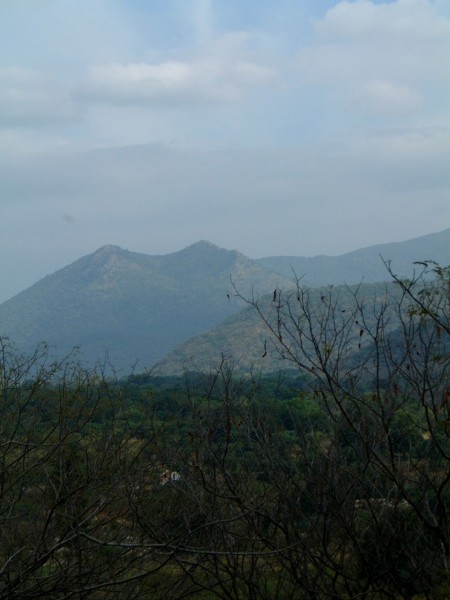
Fig 1, the drive to the river. The hills in the distance flank the Cauver.y
The scenery was pretty fantastic, hills of a thousand feet or so forming the valley tops between which the mighty Cauvery flows. The last 5 miles or so of our journey was on dirt tracks running parallel to the river. The land is vaguely tenanted by small holders tending their flocks and growing millet; it looks like time has literally stood still in this region, the noticeable advances being electricity, the passage of cars (now and then), and the infrequent rumble of a jet passing high overhead.
Now and then we caught sight of the river between gaps in the arid bushlands adjacent to the river; I was very much looking forward to the forthcoming fishing and trip in general indeed!
We arrived at the camp and proceeded to our tents. The camp is situated about 40 yards above the river channel, just enough to be above the monsoon flood levels. The tents have no electricity, but do have basic en-suite bathroom facilities with running cold water, a loo and sinks both outside and inside. For lighting, each tent (there are 5 tents in all) has paraffin lamps; one hung up on the veranda and one hanging outside the bathroom. The camp consists of a small office / kitchen and a small veranda for eating food. The camp has its own cook and a few servants including a couple of ghillies.
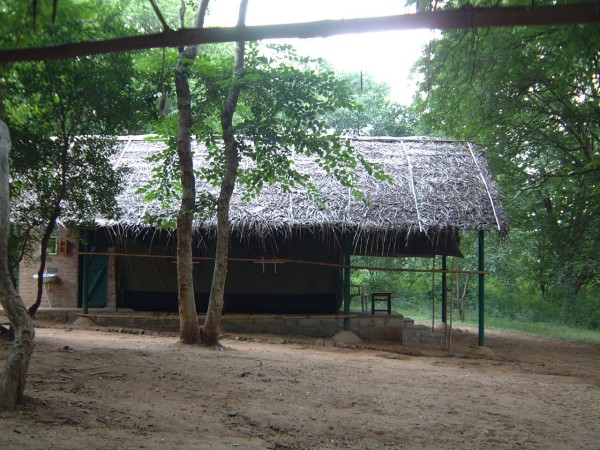
Fig 2, my tent
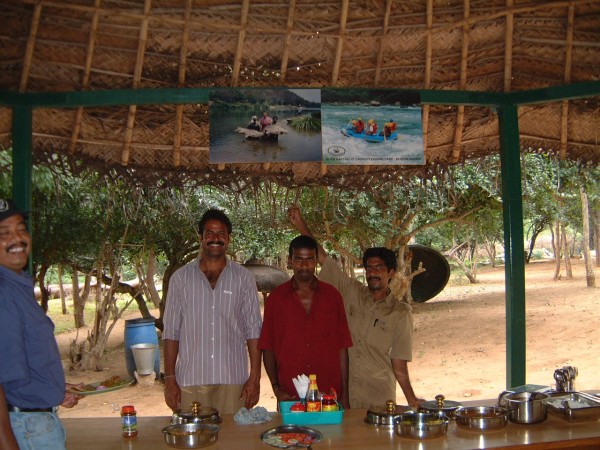
Fig 3, the main veranda and the staff, plus Rasheed loading up a plate of food!
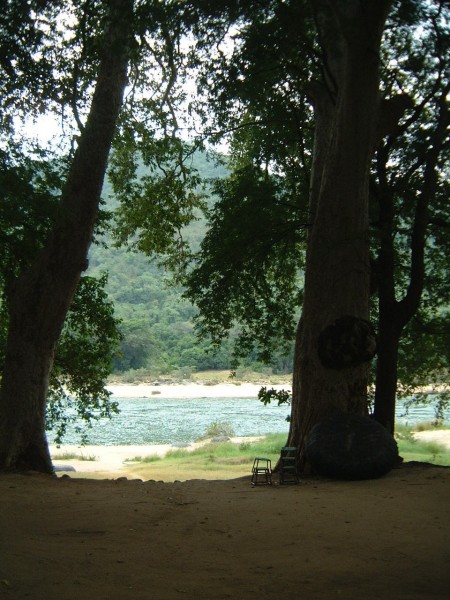
Fig 4, the view of the river from the camp
The camp has its resident troop of small red faced monkeys which make their home in the tall tamarind trees within the camp. The monkeys were partially eating tamarind fruit, and dropping the remainder down to the floor. The constant patter of half eaten tamarinds showed how wasteful the monkeys could be in times of food aplenty. I suppose that the ground creatures such as the wild pigs and deer would benefit from the monkey's choosiness.
The monkeys have a taste for ragi, and would apparently steal any that remained unguarded for even a few minutes. I was warned to keep my tent zipped up, or else the little thieves would be ransacking the bags looking for any food.
Shortly after arriving and establishing my tent, I tackled up my bait caster and proceeded to fish at the small beach closest to the camp, casting from the area where the coracles are beached up. The river is about 70 yards wide at this point, though the width varies wildly according to season. During the monsoon the river is about 140 yards across here, and at the lowest flow the river falls to being about 55 yards across. Apparently the depth at the centre of the channel is about 30 feet deep. The flow is reasonably strong, and a small lead weight is necessary to take the bait down to the bottom.
I was pleased to find that the 7 footer could manage 30 yards or so, and that allowed me to put the bait into the middle of the channel, so I could cover most of the river, depending of course upon which bank I would be casting from.
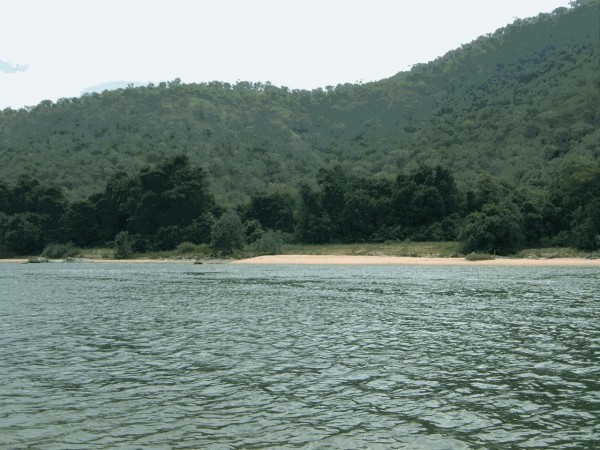
Fig 5, looking across the Cauvery from the coracle beach
Mahseer are bottom feeders, so it is important to get the ragi bait down accordingly. I cast my bait into the waters and waited. After about half an hour I had already had a number of bites, until finally managing to successfully set the hook on striking. I landed a 4lb carpfish, and it did manage to put a bend in the 30lb boat rod! The cook soon appeared beside the water to tell us not to return this fish, as it would be part of our supper! The fish was really quite pretty, as it had a nice colouration of its scales.
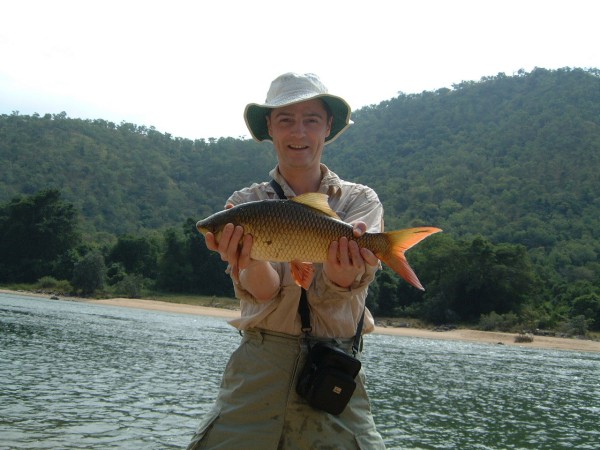
Fig 6, my first fish of the trip, a 4lb "dark carp"
We carried on fishing for another half hour or so, and then stopped for lunch. During lunch (curries and chipatties) I was told that for the remainder of my fishing, I would be looked after by my ghillie (I forgot his name as it was long and difficult to pronounce, but he adopted the name "Ghillie" from thereon. Ghillie spoke little English, but that proved to be not too much of a problem.
Ghillie took Rasheed (who could speak Ghillie's local dialect) and myself to a spot 80 yards upstream of the coracle beach to start our first serious fishing session. Coracles are circular boats made of bamboo frame and leather shell; they are about 6 feet in diameter and have about 18 " freeboard. These are the method of transport on the river, and though at first they look like a most perilous craft, they seem to be stable enough for 3 people.
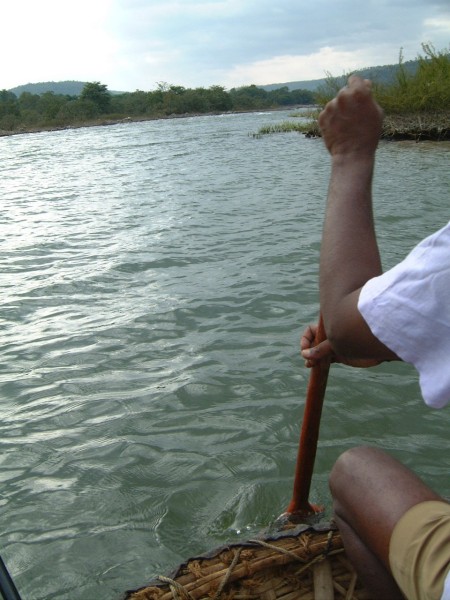
Fig 7, Paddling upstream in the coracle
We tied up the coracle to some reeds on the river side, and Ghillie casted a lump of ragi into the current, and allowed line to peel off the reel until he was happy with the location of the bait. He then checked the drag on the reel, and then handed the rod to me. He told me to wait for a bite, and then set the hook only when the rod was drawn down as a fish moved off with the bait. You must strike hard in order to pull the hook through the ragi dough and into the fish's mouth.
Kam soon appeared beside the shore, announcing that he'd just seen a snake. Rasheed & I nipped over the 20 yards to where Kam had seen the creature, however, there was no sign of the reptile, just marks in the sand showing where it had slithered off into the tall grasses. It was decided that since we didn't know what kind of snake it was (though about 5- 7 feet long judging by the tracks, it was about 1 3/4 inches in diameter), it was probably wise that we didn't try to follow it into the grass. We returned to the boat, although Rasheed stayed on the shore with Kam.
After about 15 mins of waiting, my rod jagged down violently, surprising me. Ghillie shouted "strike", which I did, but lo and behold the line snapped at the tip ring of my rod! I was pretty gutted, as it soon became painfully apparent as to the failure of the 30lb gel spun line that I was using. The tip ring of the 30lb boat rod I was using is in fact one of the roller types, not a ceramic lined ring. The gel spun line is a braid of low diameter, and it easily gets trapped between the roller and the frame holding the roller, resulting in shearing of the line. The roller is not designed to be used for low diameter braids, and from now on, I had to be very careful to watch that the braid is sitting plumb centre on the roller, and that striking movement should be done in the correct plane to be sure that the braid does not slip off the roller. I was pretty gutted, as the fish was a medium to big one; at least 20lbs, probably more. The ragi bait was big, and the fish picked it up in one movement; this is apparently the hallmark of a larger mahseer.
Ghillie was not happy with the roller tip guide, and was very reluctant for us to continue fishing in the big fish water, as he did not want us to leave long lengths of line in the fish due to smash-ups at the strike. We went back downstream to a stretch where the fish are generally smaller, and thus less likely for the heavy strains to be applied to the roller / braid junction. I cannot say that I would disagree with him really, for maintaining a successful fishery it is important to be sure to treat the fish with the respect that they deserve.
We moved to the beach opposite the coracle landing beach, and fished from there. Within seconds of the first cast, we had bites, although these were distinctly different to the bite that we had when the line got smashed. These bites were tap tap tap - nibble type bites. I was told to strike when, and only when the nibbles turned into a rod tip draw down. Many of the bites were from smaller fish that were too small to engulf the ragi ball in their mouths, and it was quite difficult to time the strikes correctly. We had to rebait the hook many times - "ragi gone" Ghillie would say, gesturing a motion to say "reel in the line", after which I had done, he then rebaited the hook.
I managed to catch over the next 2 hours, 2 mahseer (3lb & 5lb) and 3 catfish (all about 2lbs).
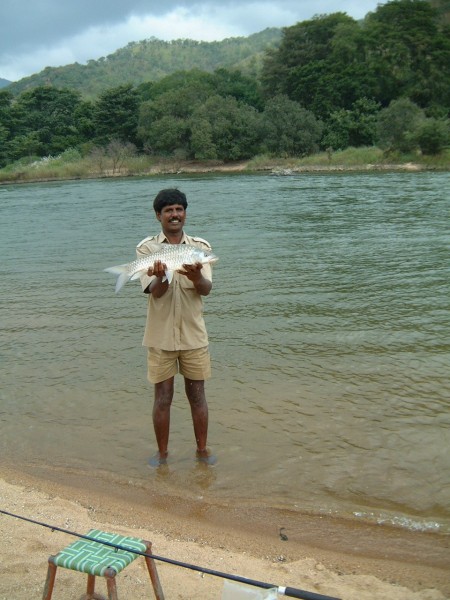
Fig 8, Ghillie and my silver mahseer
Though I was disappointed about the terrible tip ring problem, I was still quite happy with catching the smaller fish. Next time I will return with a regular ceramic lined tip ring on the rod and be able to tackle the big fish.
The catfish must be handled with care as they are adorned with 3 very nasty spines in their pectoral and dorsal fins. Ghillie would not let me unhook these fish, as there is a knack that takes painful time to learn. Ghillie is a very kind hearted soul, and he didn't want me to get cut up by the spiney catfish whilst handling them. He was very skilful in unhooking these fish. He very gingerly handled each catfish, very aware of the threat of the razor sharp spines that these fish possess. The catfish spines are not just needles, they are bladelike too. The catfish all made grunting type noises similar o the noises that french grunts and jack make when also out of the water. Ghillie kept all of the catfish, as they too would be part of the evening's supper alongside the carp fish I caught earlier.
Whilst we were fishing, we saw 2 ospreys attack a small egret, one of them snatching it in mid air and carrying the hapless egret off to a certain doom.
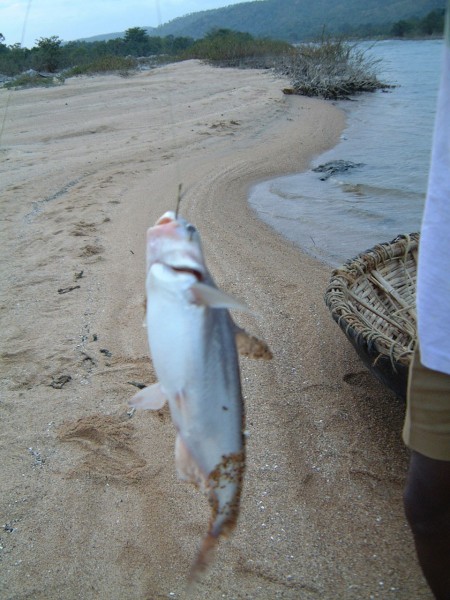
Fig 9, a catfish
At moon rise, we packed in fishing, and Ghillie rowed me back across the river to the coracle beach and I proceeded back to camp whilst Ghillie prepared the coracle for night store. I tried to help Ghillie stow the coracle, yet he wouldn't have any of it. He was a star, and really worked hard. I really wanted to muck in and help out, but he would have none of it; every time I tried to help, he would grin and say "no sir, I do". He was a real hard worker and did his absolute best to look after me. I made a mental note to tip him handsomely at the end of the trip as he really did work hard to guide me around the river. I have rarely come across people like Ghillie. He certainly is a far cry from the whiskey swilling, grumpy so-and-so's that I have perchanced across in my past.
During supper, I talked to the camp staff about the fish. They showed me a photo of a brace of big fish that had recently come out of the water (last year, 105 lb and 95 lb to a pair of anglers). These are whopping fish indeed, and really make for an impressive sight.
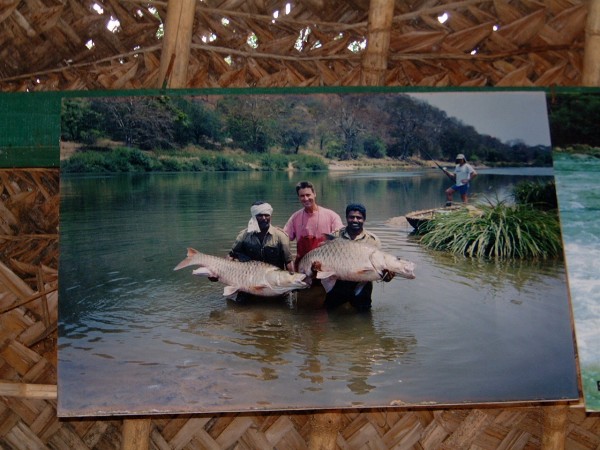
Fig 10, a photo on the wall of the veranda!
Just before darkness fell, the air became full of the nocturnal insect and amphibian din, and the wind stilled for the Indian night. Though tigers have been gone from this area since the last few years, there are still panthers, elephants and bears in the adjacent lands, and they still come to the river to drink. This location is still a wild land.
Day 3 19.12.01
After breakfast, Ghillie rowed me over to the beach where he and I had been fishing yesterday afternoon. We had very few bites, and after about an hour and a half Ghillie said that we should move along the river some 40 yards upstream to fish in the faster waters there. On the way. I saw some tracks in the sand that looked like a cat's print, but as large as my hand! I showed the prints to Ghillie, and it was a bear's trail apparently, not the cat as I had thought it to have been. Ghillie had recently seen a leopard basking on top of a large rock downstream, but they are rarely seen in daylight.
We fished in the faster water for another hour without a bite, and decided to move back to where we had started. After 20 mins or so I had a decent bite, and successfully landed a 7lb mahseer. After landing this fish, we fished for a little longer, and caught another small mahseer of about 3lb. A little while longer we rowed back across the river to the coracle beach, and had lunch.
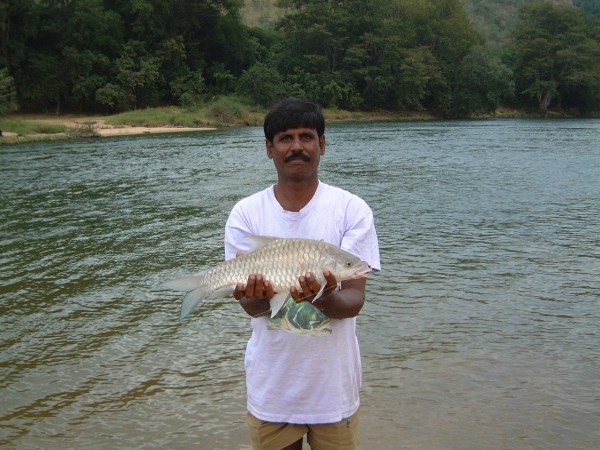
Fig 11, a small golden mahseer
Whilst we were waiting for lunch, Rasheed, Kam and I were messing around casting bits of ragi out on a bamboo pole and fixed line into the side waters at the coracle beach. I was casting a Black Pennel fly out to where I had seen a fish rise, and indeed caught a minuscule fish of 3 inches. Rasheed caught his first ever fish, a small silver carp on the bamboo pole.
After lunch, Ghillie and I rowed back to continue fishing where we had left before lunch. Fishing was slow, and we had no bites, so Ghillie said we should move downstream 50 yards or so to fish in the slower waters. We bagged a 2lb mahseer, which like the rest of the mahseer, we returned safely to the river. All mahseer must be returned in good order, as they are catch & release only.
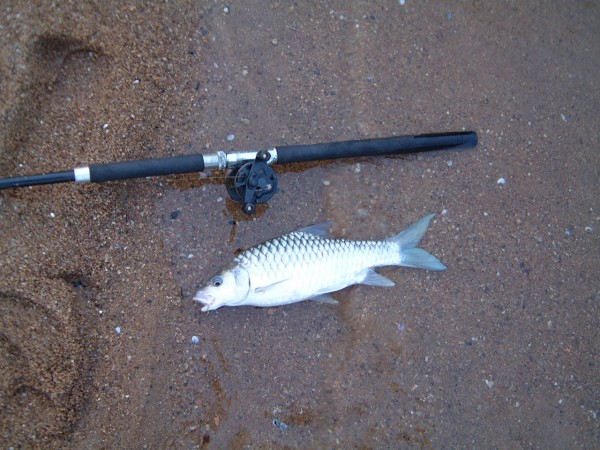
Fig 12, a 2lb silver mahseer
By about 4 o'clock, due to the lack of bites, Ghillie said that we should take the coracle 300 yards downstream to fish the waters there. We tied up mid water to some reeds that poked up through the water from some submerged rocks that would soon become uncovered by the falling water. The river falls constantly after the monsoon rains stop. It is incredible how much range in current flow exists between monsoonal high and dry season low, some 18 feet in vertical column!
We fished this spot for a while, but had no bites, so Ghillie took the coracle down another 100 yards into the deep slow waters there. Apparently this spot is the deepest section, and the pool is 50 feet deep!
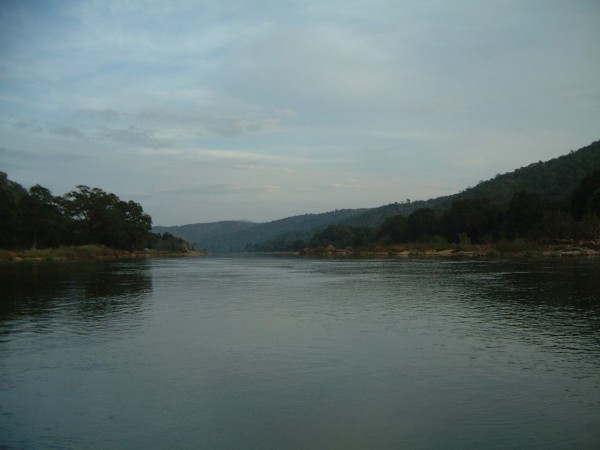
Fig 13, paddling downstream
We moored the coracle up and climbed onto a rock from which Ghillie cast the bait into the water, and we waited. We had a few bites, but nothing to strike at. By now, the twilight was beginning to set in, and the still air made for a very smooth water surface. There was a lot of surface activity from silver carp-fish that rise at insects and small fish. I wished that I had brought my fly rod with me instead of leaving it back at the camp. Ghillie told me that they are good fun to catch on the fly, and the next sortie out we should most definitely bring it with us.
Aside from the mahseer, there are 4 other big fish in the river: catfish, "silver carp", "dark carp", and a predatory fish whose name I don't know, but it is long and thin and toothy. The "carp" fish are not true carp as we know them, but that is what the locals call them in English. The dark carp are bottom feeders and grow to 20lbs or so. The silver carp are game fish and feed in the upper water upon insects and small fish; they reach a maximum weight of 10lbs or so. The long thin fish are often caught on spinners, and they lurk around in the stiller waters.
Still fishing from the rock, we had no bites to strike at, so Ghillie took me downstream 30 yards in the coracle, where he and I tied up the boat onto some reeds; we were still on the opposite bank (from the camp). As we were approaching our mooring point, I saw something large leap into the water some 100 yards downstream of our position, making a large and audible splash. The splash was as big as a person leaping into the water belly flop style! I asked Ghillie "what on earth was that?" "Crocodile" said Ghillie, with an air of nonchalance. I watched the area of the splash, and sure enough, we saw the wake make its way over to the other side of the river, as the reptile traversed the water.
"Mmm, crocs, right enough" I thought to myself. I was interested to see such creatures in their own natural environment, but perhaps this was not the most ideal time I would have liked to perchance upon such a sighting. Certainly not in twilight and definitely not in the fragile coracle. Anyway, Ghillie seemed unperturbed by the crocodile, so I put thoughts of toothy maws erupting from the waters beside the coracle onto the back burner for the time being.
Ghillie had cast the ragi bait deep into the pool and as usual handed the rod over to me as soon as he had put the multiplier into gear. Within a couple of minutes, I started to have a couple of bites. When the bites turned into the rapid tug, I struck, but there was no tension in the line. As usual, I lowered the rod tip, hoping for another bite, should the ragi still be surrounding the hook. After a couple of minutes, though I had already guessed as such, Ghillie said the now familiar words "ragi gone". This means "reel in and I will rebait the hook, as there is no ragi on the hook". As always, Ghillie was right, and the bare hook was retrieved. Ghillie rebaited the hook and cast it out into the chosen water. After checking the reel into gear he handed the rod to me, though this time I declined, and let him fish. I had done this many times already, when I thought that it was enough for me and I needed a break, plus Ghillie loved fishing too, so it was a nice treat for me to see how Ghillie behaved with the rod. Ghillie accepted the rod with a grin and we engaged wait-mode.
During the time that Ghillie was fishing, there were two more loud splashes, the latter one being uncomfortably close, especially since it was getting rather dark, and the crescent moon was clear to see in the nocturnal gloom. Every time I flinched and looked around at the source of the noise, Ghillie simply said "crocodile", as if to set my mind at some sort of rest.
A crunching noise passed by our near bankside, again, on my prompting "what the hell was that?" look on my face, Ghillie said "crocodile" without a hint of worry at all, despite the seeming close proximity of the source of the ghoulish sound. He was obviously used to them and was not in the least bothered. However I remember him telling me that he doesn't go near the crocs as they could cause a lot of bother to anyone inside a coracle. "If you fall in, then they might make things somewhat uncomfortable", that was the general gist of what he was trying to say in his broken English. I wondered what he meant by "near" the crocs, as by my reckoning, we were uncomfortably close to say the least.
This particular croc was walking along the stoney bankside as close as perhaps 10 yards away (or so it sounded), and it was dark. Ghillie was not in the least bothered, and stayed put holding the rod in anticipation. He did not even bother to look at the source of the noise, as he was fervently staring at the rod tip looking out for a bite. For me, the rod tip was the last thing on my mind, and I have to admit that for once I was secretly hoping that we wouldn't be having a bite, nor hooking up a fish at all!
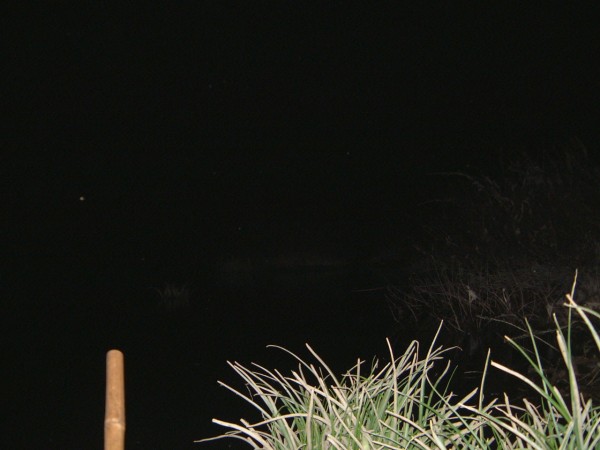
Fig 14, view from coracle whilst hearing crocs around. The crocs were downstream of us in the area just visible in the photo one third up from bottom right hand corner of the photo. As the photo suggests, it was very dark.
After a while, I noticed that Ghillie was now holding the rod up in anticipation of a strike. I asked "nibble?" He nodded, and then within 10 seconds struck into what seemed like a good fish. The rod bowed into an arc, and then sprang back losing its tension entirely. Upon inspection, poor old Ghillie had fouled up the wretched roller with the line and severed the line on the strike. I was quietly pleased, though did my best to conceal my subterfuge, as a tussle with a large mahseer was the last thing I was wanting, what with our reptilian associates seemingly all around. A large mahseer takes hours to subdue, and often lead the coracle long distances (the 105 lb fish in the photo in the camp veranda went downstream over a 1000 yards before being landed) downstream throughout the fight. I was not too keen with a nocturnal battle in the flimsy coracle in these deep and now very dark omnipotent waters.
Well, that was that, another large mahseer had unwittingly adorned itself with a hook and a long (40 yard) length of braid entirely due to the roller tip guide of my boat rod. Though I hate leaving hooks and line in a fish, I was however quite glad that we would be calling it a day, as it was very definitely what I would call "night" and no longer the evening rise. The crocs were causing a bit of a stir, and I felt very vulnerable in the little coracle, and fighting a large mahseer in the dark might see me being ditched into the croc infested waters, which is something I would hasten to avoid, besides, I'd get my camera wet too.
Back to the stupid rod, that settles it, the hacksaw is coming out to get rid of the abomination on the end of the rod; it has to go. The roller tip guide is a worthless piece of junk and I will replace it ASAP.
After this moment, when we had got over the terrible disappointment of losing a good fish in the silliest of ways, we set off back to the camp. Although I was secretly glad that we had lost the fish, I was still annoyed with the inadequacy of the rod tip.
Ghillie did a great job of paddling the coracle back upstream along the slower river margins until we reached the coracle beach, and thereafter walked into the camp to tell our respective tales for the afternoon and evening's angling. On the way back, we scared a number of fish in the slow and still waters beside the river's edge; a couple were pretty large, and made a fairly hefty surge and bow wave as they made off into the deeper waters.
That night, after supper, Kam, Rasheed & I supped whiskey in the pale light of the hurricane lamps entrenched within the nocturnal insect din, and talked about tales of the Indian jungle....
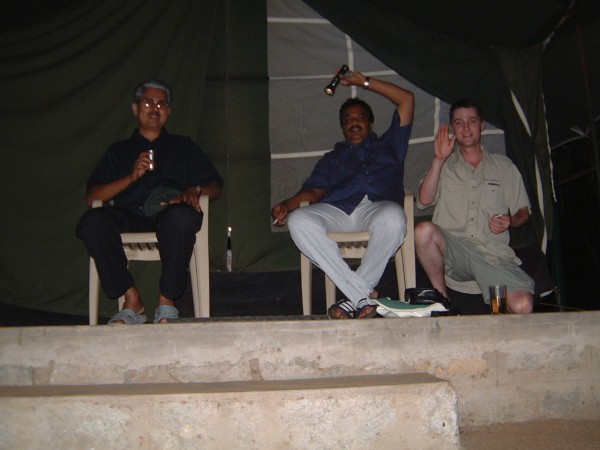
Fig 15, Kam, Rasheed & myself in front of tent after supper.
The verandas of the tents from which we conducted our after dinner banter, provided such an excellent ambience, and now and then, in the brief lulls in the insect and amphibian din, we could hear the noise of the river, and on occasion we would hear some strange sound emanating from the jungle on the other side of the river. One cannot help but admire the Indian jungle and wildlife living within.
Day 4 20.12.01
Since I was in bed by 22:30hrs last night, and I didn't wake up during the night, (unlike the night before, when I couldn't get back to sleep again for what seemed like ages) I managed to get an early start on the river, before breakfast. I took a bunch of small bananas, and swigged off a cup of coffee to see me through until lunch.
Ghillie met me beside the coracles, and I noticed that he'd prepared a fresh bag of ragi. Ghillie immediately pointed out that the level of the river had fallen by a foot over night, and it was plain to see as the sands showed yesterday's water mark. The coracle beach is a steep one, shelving off into deeper water, however, on the other side, the sands were much shallower in their gradient, and as we approached the shore from our perches in the coracle, we saw that the water was about 4 feet away from where it had been yesterday. It was plain to see our foot steps at the water mark of yesterday, and the fresh sands that now lay exposed in between these and today's water mark.
Ghillie baited up the hook with some fresh ragi and cast it to a likely spot. After nearly an hour without any signs of activity, Ghillie pointed downstream and said with his usual enthusiasm for things piscatorial: "flyfishing!". I had brought along my 9 foot tarpon rod, and this was presently stowed in the coracle, pieced together and with a fly already attached to the leader.
We went by foot downstream into the broader and shallower waters, Ghillie toting the baitcaster and I the flyrod. Quite a large area of sands and silts had been exposed by the falling water, and I noticed animal tracks all over; "deer", "pig" said Ghillie at various intervals, pointing to the numerous tracks of last night's visitors to the water's edge.
Within 150 yards, Ghillie pointed out some large dark carp in shallow water. They were slowly moving around the sandy bay, snouts to the ground. Try as I might, I couldn't entice a bite. I tried various flies, even some small shrimp patterns, electing to try to scuttle these over the sandy bed past the carp. We walked a little further until I noticed some unusual tracks that were left by a large animal that had come out of the water some 15 feet or so, and then turned and headed straight back. The foot marks were like a 5 toed dinosaur, and the creature had obviously been trailing a portion of its body over the sand. There was no doubting that this was the telltale sign that a croc had come out of the river during the night.
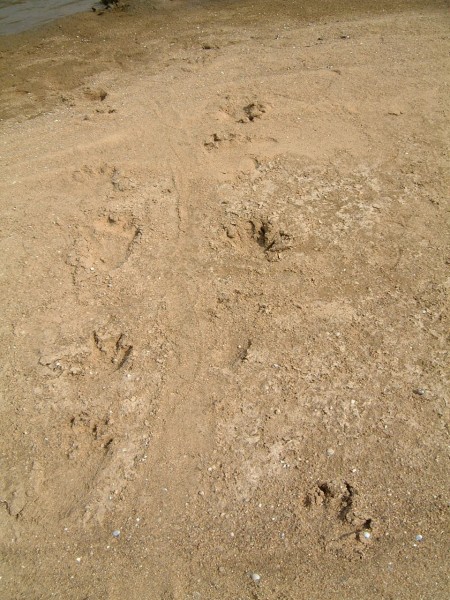
Fig 16, crocodile tracks left last night. Look at the drag marks of the tail in between the footmarks.
After looking at the croc tracks, Ghillie said that it was getting near lunch and we ought to set off back to camp. When we reached camp, lunch was late, and we had an hour or so to wait. Ghillie said once again "flyfishing", and proceeded back to the coracle, with myself in eager pursuit.
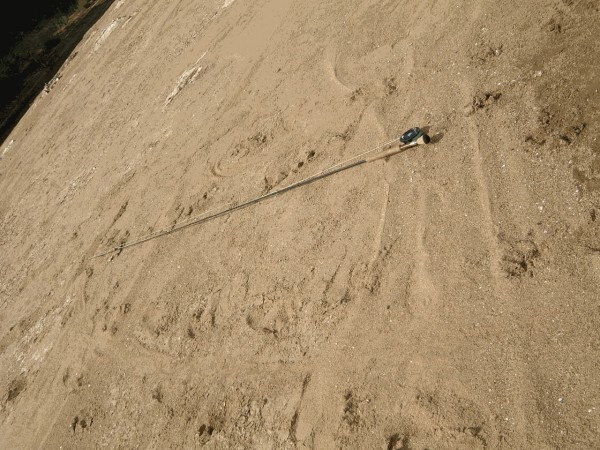
Fig 17, croc tracks and 9 foot flyrod. The distance between the footmarks was some 3 feet, with the tail drag in between. The photo shows the croc’s passage out of the water by some 15 feet, and then the about turn straight back into the water.
Ghillie paddled the coracle along the campside margins of the river, and instructed me to cast a red lure (chenille body and marabou tail) into the waters next to the bank. After 70 yards or so, I saw a fish flash at my fly, though fail to eat the fly; that gave me some courage that the fish were at least interested in the fly. We approached an area of the river where the bank jutted out and the still waters gave way to the main current. Here Ghillie tied up the boat and I cast the fly into the current to whirl around into the waters beside the bank. Within 10 mins or so I felt a fish hit the fly, and I successfully landed a 1.5 lb silver carp! Shortly after, I repeated the event with a similar sized fish of the same species. I was quite happy with the choice of fly, and was having a lot of fun casting my 9WF flyline easily into the upstream wind that had picked up.
I was continuing casting the fly as I had been, forty five degrees to the current and allowing it to swing around, twitching the rod tip to try to make the fly a little erratic, when something fairly thumped the red lure, and loose line peeled through the rod rings and then off the reel. I subdued the first run of the fish quite well, and after a 5 minute fight saw that a nice hefty 4lb silver carp was tiring beside the boat. Ghillie boated the fish, and saved him for the evening's supper!
For me, this fly caught fish was the highlight fish of the trip; a fly caught fish is so much more memorable that one taken on a bait rod. It proved to be my last fish of the trip, as shortly after, our time was up, and we paddled back to the camp to have lunch.
After lunch, we packed up our bags and dismantled the rods, as our fishing trip was now over, and it was time to go back to Bangalore.
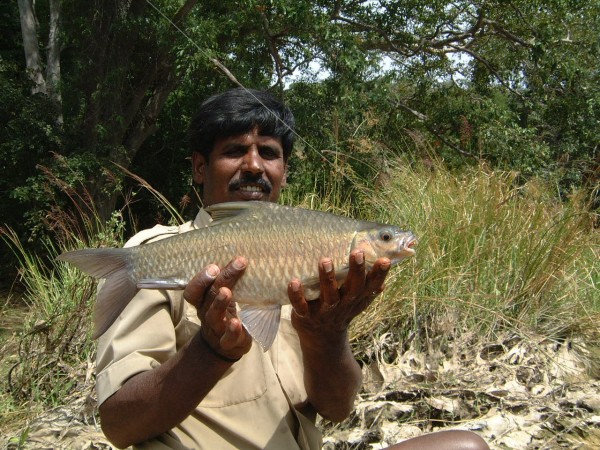
Fig 18, Ghillie & my 4lb silver carp taken on fly.
All in all, a very excellent trip, and well worth the effort going there. I'd recommend fishing the Cauvery to anyone interested in good angling and a good environment to be in. The camp and its staff were absolutely excellent, and made for a very nice setting quite befitting with the beautiful scenery around.
I would really like to go back to this place indeed!
MPDM/21.12.01