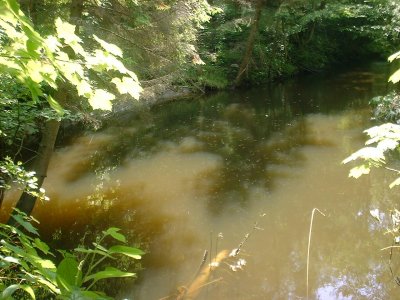
June 10th, River Laver.
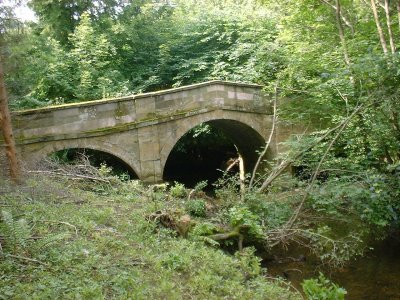
Weekend of moving house, so not much time to spare to go fishing. However, I still managed to get 2-3 hours on the Laver, starting from below the Lunch Pool, and finishing at the double arch bridge.
I got 7 fish for my efforts, using the grhe variant, which now has a tail, and I think more or less complete in this incarnation. Since the fly is more or less made out of rabbit fur & some copper wire, I'll refer to this pattern as the Rabbit Nymph (RN).
I'm fairly certain that the trout think that the RN is a nymph in the stages of moulting into the dun stage. What happens is that the nymphs decide to leave their watery homes, and swim upto the water's surface to hatch. When they get near to the surface their skin splits and the dun starts to wriggle out. I'm not sure if this only takes place on the surface film, or whether it starts happening several inches below. I have heard that a gas is released inbetween the 2 layers of skin, i.e. the old one and the new one of the dun. This would add bouyancy and help the insect to rise to the surface in the absence of locomotive action. As the nymph is wriggling to free itself from the shuck, it can't swim, so either it has to be attached to the surface film, or their needs to be some form of bouyancy assistance to ensure that the splitting can occur beneath the surface.
The fly seems to work best in turbulent water rather than in the back halves of pools. I think that the turbulence in the water helps give the nymph life-like action. Water flowing past the "hackle" of the fly makes the guard hairs of the rabbit fur in the thorax region move in a wriggling fashion, like the legs of a hatching nymph, dun to be.
The pale colour of the fly matches the paleness of the hatching nymph, caused by the layer of gas, and loosening nymphal shuck.