The GRHE Variant: a classic fly
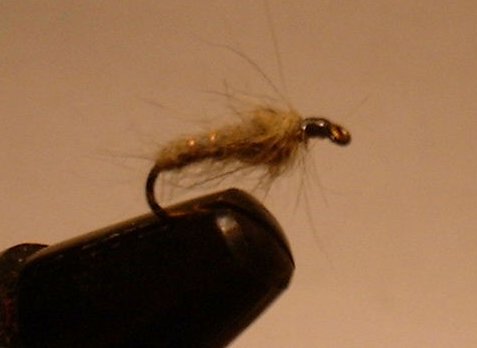
The Gold Ribbed Hare’s Ear is a very successful pattern with which to catch fish. It is one of my favourites, and one of the easiest to tie as well. The true grhe is somewhat different to my variant shown here, but the fact is that the ribbing on the hare/rabbit fur dubbing is the key to the fly’s success.
I use rabbit fur at the moment, as I like the soft bluey underfur for the body, and the guard hairs for the thorax. I use copper filaments from ordinary electrical cable instead of the commercially bought stuff. Of course, good quality tying silk is a must. The cost of the fly is really just the price of the hook, as the ingredients are virtually penniless, especially if you have an air-rifle J .
G.E.M. Skues believed that the grhe (dry) represented the large spring olive. Halford couldn’t decide exactly what the fly was supposed to be imitating, and as a total imitation purist, decided never to use the fly again. My own view is that the grhe (wet) is a good jack of all trades fly and can represent more than one species of ephemerid. Although I reckon when wet, and in the upper water, simulates the hatching nymph.
The fly is really best fished in the top foot of the stream, but it can be tweaked along deeper in the slower pools. The fly is best fished upstream (well that is how I like to fish anyway) using a fine tippet that floats. Because the tippet is sitting on the surface film, you can see what the fly is doing simply by observing the spot where the tippet sinks into the water (the "hole") by the weight of the fly. If a trout were to snatch the fly, the tippet closest to the "hole" moves under water fairly rapidly, and is very evident to the angler, provided that he/she is keen sighted and watching the "hole" with great concentration. Many trout give themselves away by the disturbance they make on the surface of the water when they seize the fly; many show a faint "wink" under the water as their bodies turn in the light and reflect some to the angler. However, there are many times when a fish takes the fly, and remains concealed from the angler. Since the fly is being fished upstream, the trout may easily reject the fly, and spit it out as it realises that this nymph is not real. Studying the "hole" is the only true way to detect the deeper water takes. I have my favourite brand of 2lb tippet material that I find works with this grhe variant very well.
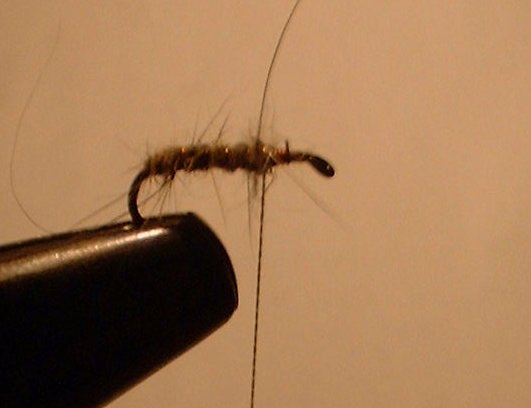
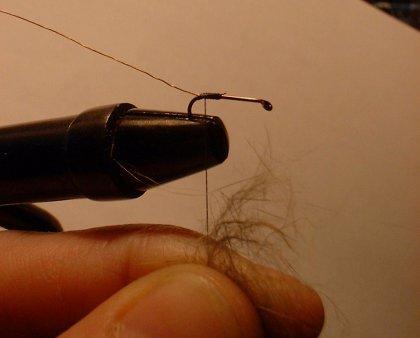
The fly is tied in accordance with the photos below. Sorry if they are not focussed too well, I have yet to get the hang of the macro mode on my camera. BTW, I usually like to add a small wing of duck’s preening gland feather, but I have run out until I shoot my next duck, so this is the GRHE-Spartan Variant I suppose.